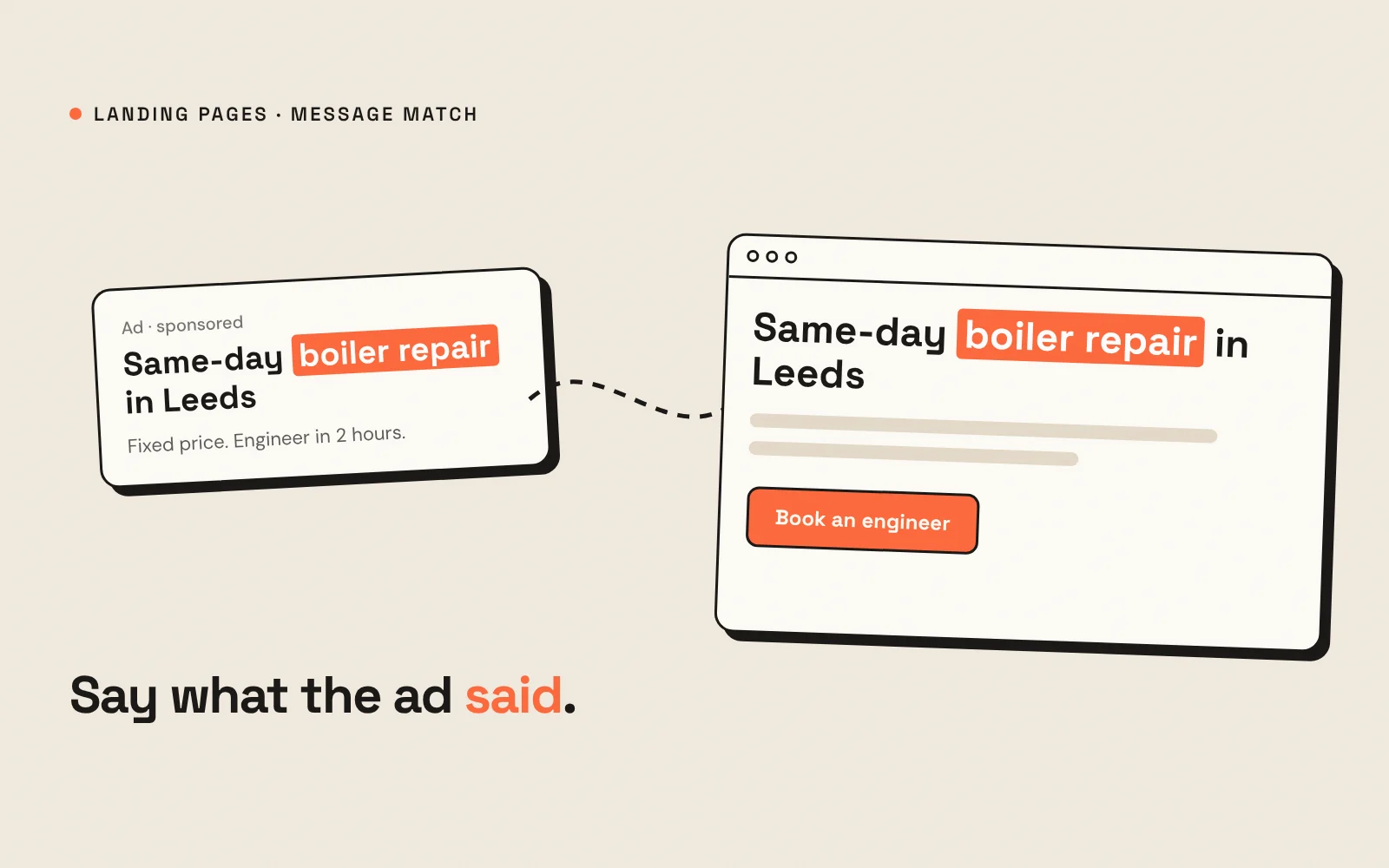
Someone clicks your ad because it promised something specific. If the landing page opens with a different message, they have to work out whether they are in the right place. Many do not bother. That gap between the ad and the page is one of the most common, and most fixable, reasons paid campaigns underperform.
The fix is called message match: making the landing page headline a clear continuation of the ad.
What message match means
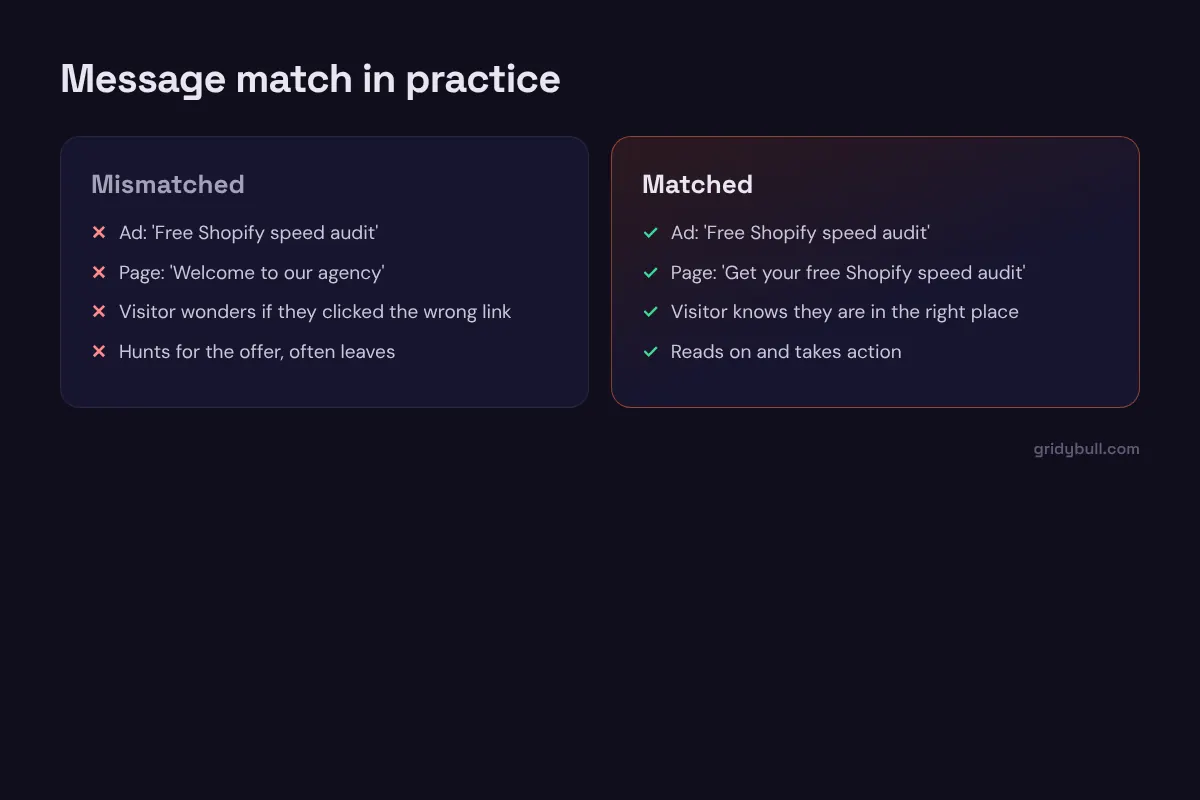
Message match means the visitor sees the same promise, in similar words, on both sides of the click. The ad says “Free Shopify speed audit”, and the page headline says “Get your free Shopify speed audit”. Nothing clever, nothing new: just confirmation that they arrived where they meant to go.
Why it works
- It reduces doubt. Visitors decide in seconds whether to stay. Familiar words answer the question “is this what I clicked?” instantly.
- It keeps the intent alive. The visitor clicked with a specific need in mind. Repeating that need keeps their attention on it.
- It can support ad performance. Ad platforms consider landing page relevance and experience, so a page that matches the ad is good practice for paid search too.
A simple formula for matched headlines
Start with the ad and pull out three things:
- The offer: what the ad promised (a free audit, 20% off, a demo).
- The audience: who the ad spoke to (Shopify owners, dentists, coaches).
- The key words: the exact phrase that made the ad specific.
Then write a headline that includes the offer and the key words, and a subheadline that adds the audience and the reason to believe:
Headline: Get your free Shopify speed audit
Subheadline: We review your store’s apps, images and theme code and send you a prioritized fix list within 48 hours.
Match more than the words
Message match goes beyond the headline:
- Offer details: if the ad says 20% off, the page must say 20% off, not “up to 20%”.
- Visuals: use the same product image or style as the ad, so it feels like one experience.
- Tone: a playful ad followed by a formal page feels like a different company.
- Call to action: if the ad says “Book a demo”, the page button should too.
One page per message
If you run ads with different angles, such as price, speed and quality, one generic landing page cannot match all of them. You have two options:
- Build a variant per ad group. Duplicate the page and change the headline, subheadline and hero image for each angle. Most landing page builders make this quick.
- Use dynamic text replacement. Tools like Unbounce and Instapage can swap headline keywords based on the search term or URL parameter. Use it carefully and always set a sensible default.
Common mistakes
- Clever over clear. A witty headline that needs a second read loses visitors who arrived with a specific need.
- Sending ads to the homepage. Homepages speak to everyone, so they match no ad well.
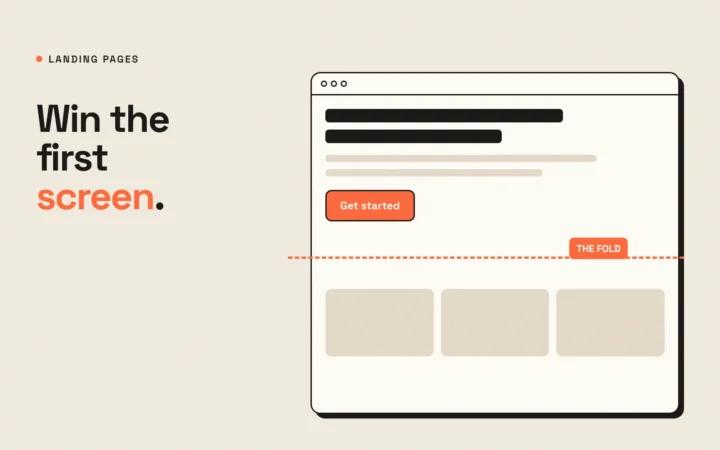
- Burying the offer. If the ad promised a discount, show it above the fold, not in the footer.
- Forgetting to update the page. When the ad copy changes, the page often does not. Review both together.
A quick audit you can do today
- Open your top three ads side by side with their landing pages.
- Read the ad, then look at the page for three seconds.
- Ask: does the headline repeat the ad’s main promise?
- Fix the biggest mismatch first and watch the conversion rate over the following weeks.
Message match will not rescue a weak offer, but it stops a good offer from being lost in the first three seconds.
Related reading: Above the Fold: What to Put in the First Screen of Your Landing Page