There are two main ways to give clients and teams an easy-to-edit WordPress site. One is a visual page builder, such as Elementor or Divi, where editors drag and drop elements. The other is a custom theme with structured fields, most often built with Advanced Custom Fields (ACF), where editors fill in content and the theme handles the design.
Both are valid. They suit different situations.
How page builders work
Page builders give editors a visual canvas. They can add sections, columns, images, buttons and widgets, and style them directly. This is flexible and quick for building new layouts without a developer.
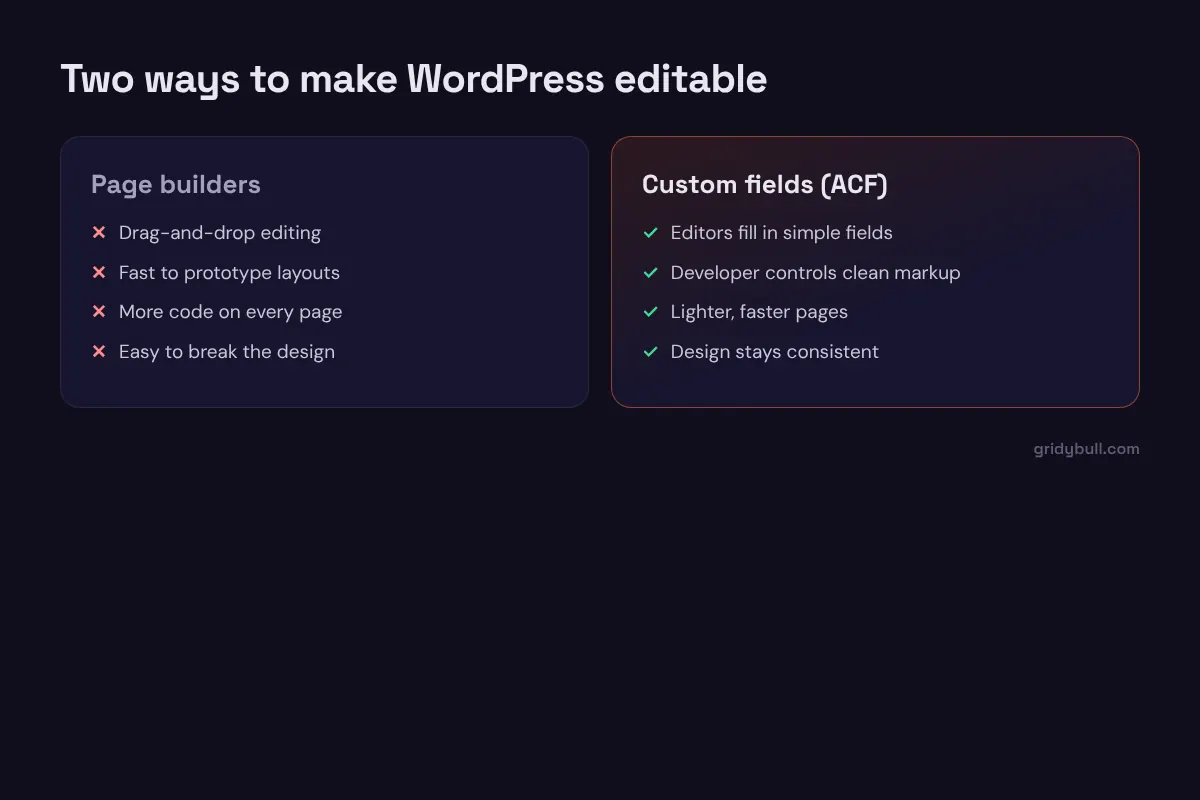
The trade-offs:
- Extra code: builders often output more HTML, CSS and JavaScript than a hand-built theme, which can affect speed.
- Design drift: with full freedom, pages can slowly become inconsistent: different spacing, fonts and button styles.
- Lock-in: content is stored in the builder’s format, which makes switching later harder.
How the custom fields approach works
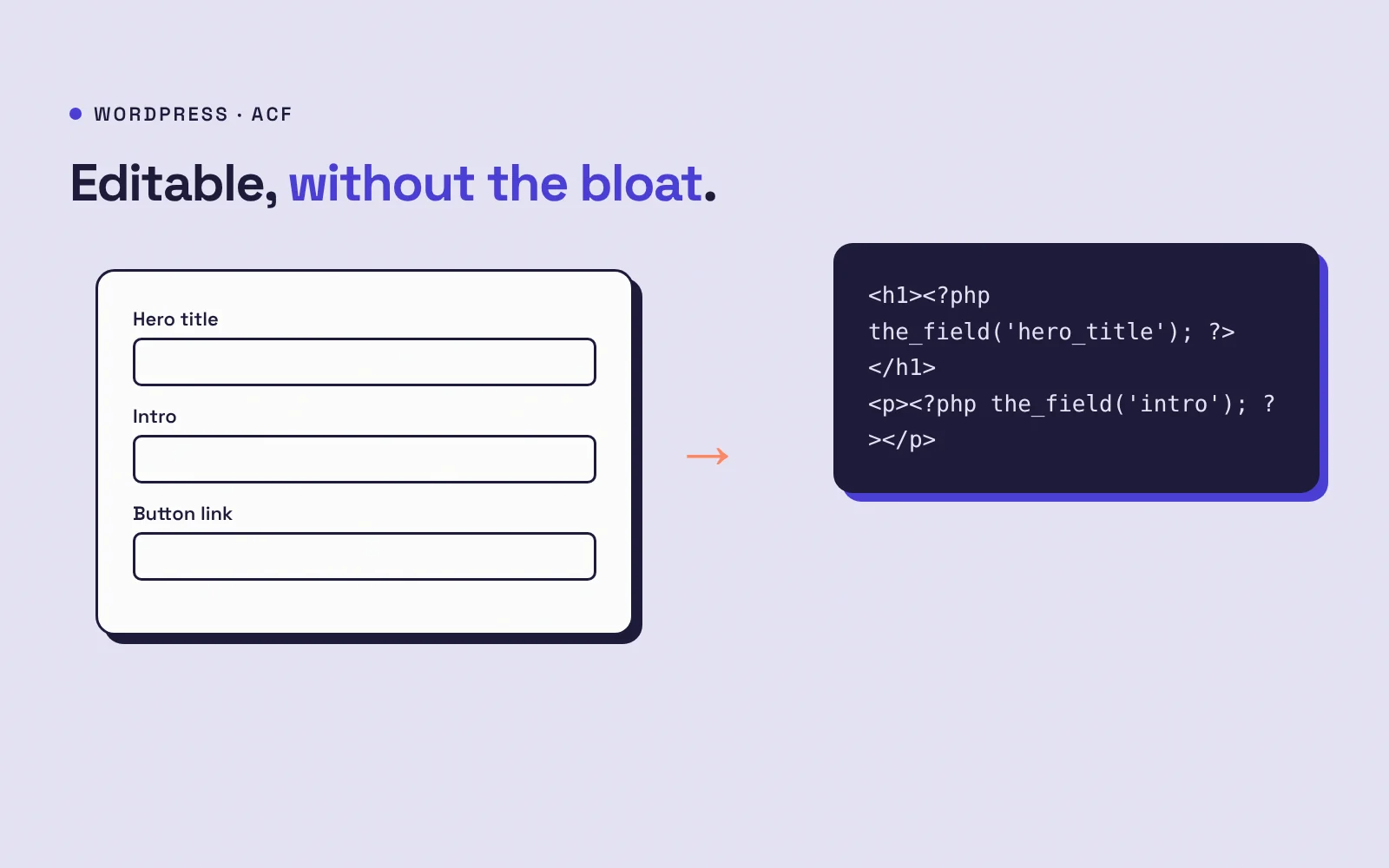
With ACF, a developer builds reusable sections, such as a hero, services grid, testimonials or FAQ, and defines simple fields for each. Editors add sections to a page and fill in the fields. The theme renders them with consistent, clean markup.
The trade-offs:
- Less freedom: editors can rearrange sections and change content, but not invent new layouts without a developer.
- Upfront development: sections need to be designed and built first.
Comparing them on what matters
Speed
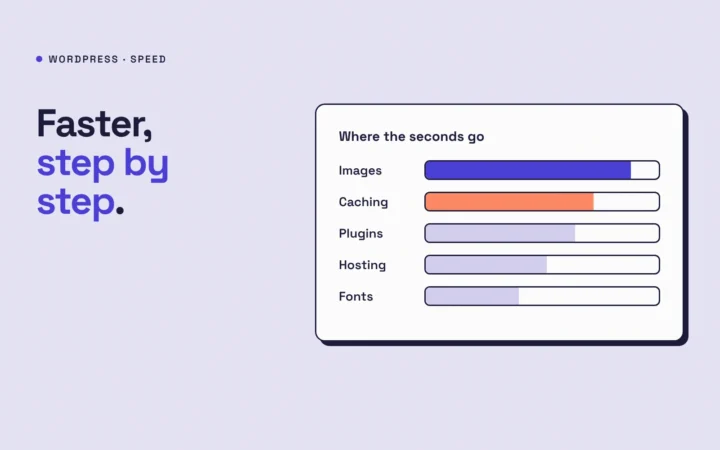
A lean custom theme with ACF usually loads less code per page, which makes it easier to achieve strong Core Web Vitals. Page builder sites can be fast too, but it takes more care.
Ease of editing
Builders are easier for people who enjoy designing. Field-based editing is easier for people who just want to update content without worrying about breaking the layout.
Consistency
Fields keep the design system intact: every button, heading and section looks the way it was designed. Builders rely on discipline to stay consistent.
Long-term maintenance
Custom themes depend on your developer, but have fewer moving parts. Builder sites depend on the builder and its add-ons staying compatible.
When to choose a page builder
- Your team wants to design new page layouts frequently
- You need to launch quickly with a limited budget
- Speed is important but not the top priority
When to choose ACF and a custom theme
- Speed and consistency are priorities
- Editors mostly update content rather than design layouts
- You want a site that stays clean and on-brand over years
A middle ground
WordPress’s own block editor has become a strong option too. Custom blocks, including ACF Blocks, let developers create on-brand components that editors use inside the native editor, combining visual editing with controlled design.
The best choice depends on who edits the site and how often the layout really needs to change. For most business websites we build, structured sections hit the sweet spot: easy to edit, fast to load and hard to break.
Related reading: How to Choose a WordPress Theme That Won't Slow You Down