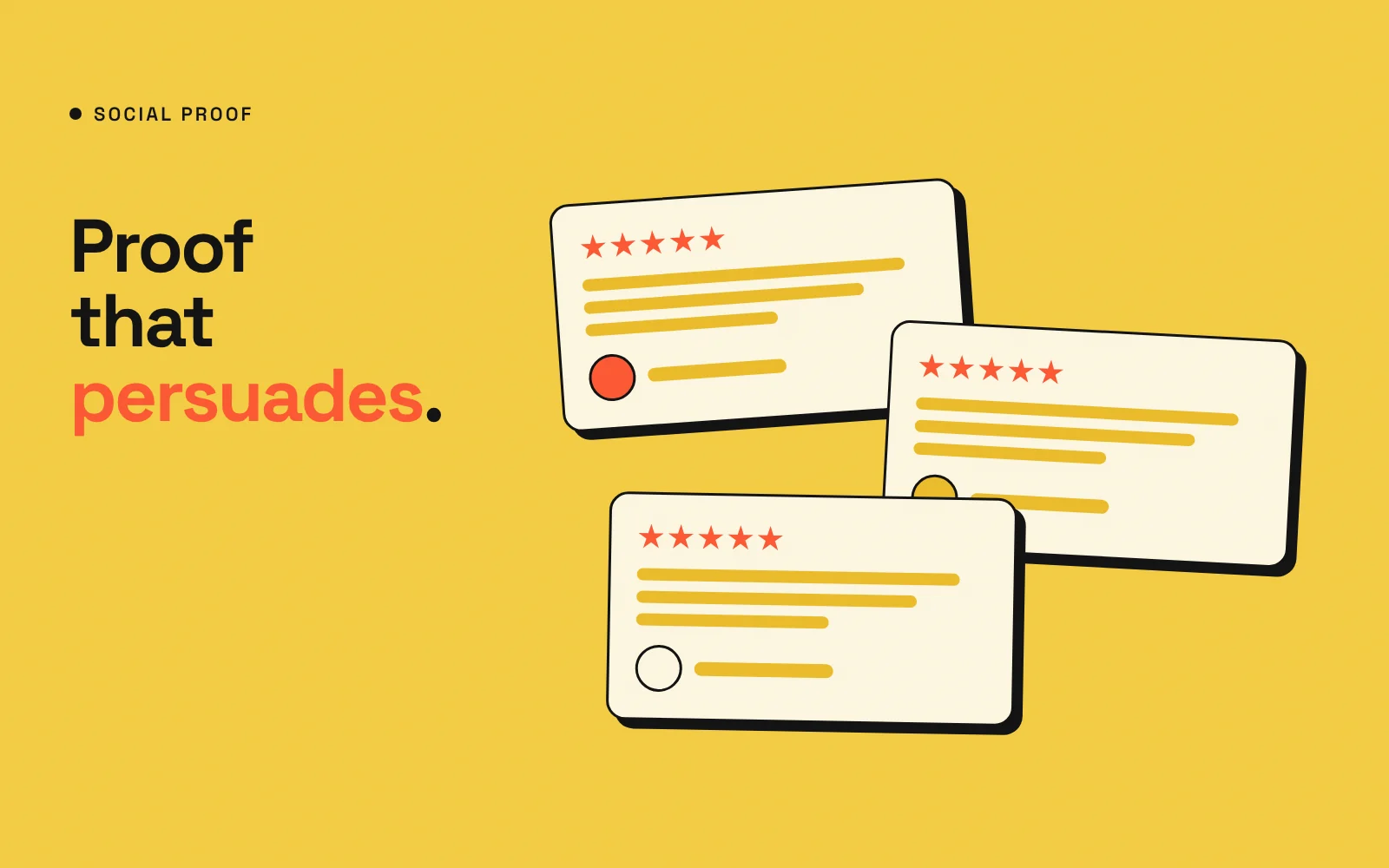
People look to others when they are unsure, especially before hiring a service provider they have never worked with. That is why social proof, meaning evidence that others have trusted you and been happy, is one of the most powerful elements on a website. But generic praise does little. Specific, credible proof does a lot.
Types of social proof
Testimonials
Quotes from clients about working with you. The strongest testimonials mention a specific situation, what you did and the result: “We were losing leads from our old forms. After the rebuild, every enquiry reaches our CRM and our team responds the same day.”
Reviews on third-party platforms
Ratings on Google, Clutch, Trustpilot, Upwork or Fiverr carry extra weight because visitors know you cannot easily control them. Link to your profiles where possible.
Case studies
The most convincing format for service businesses. A case study shows the client’s problem, your approach and measurable results, with screenshots. One detailed case study can do more than ten short testimonials.
Client logos
Logos of recognizable clients signal credibility at a glance. Only use them with permission.
Numbers
Figures like years in business, projects completed or clients served can help, as long as they are accurate and you can stand behind them.
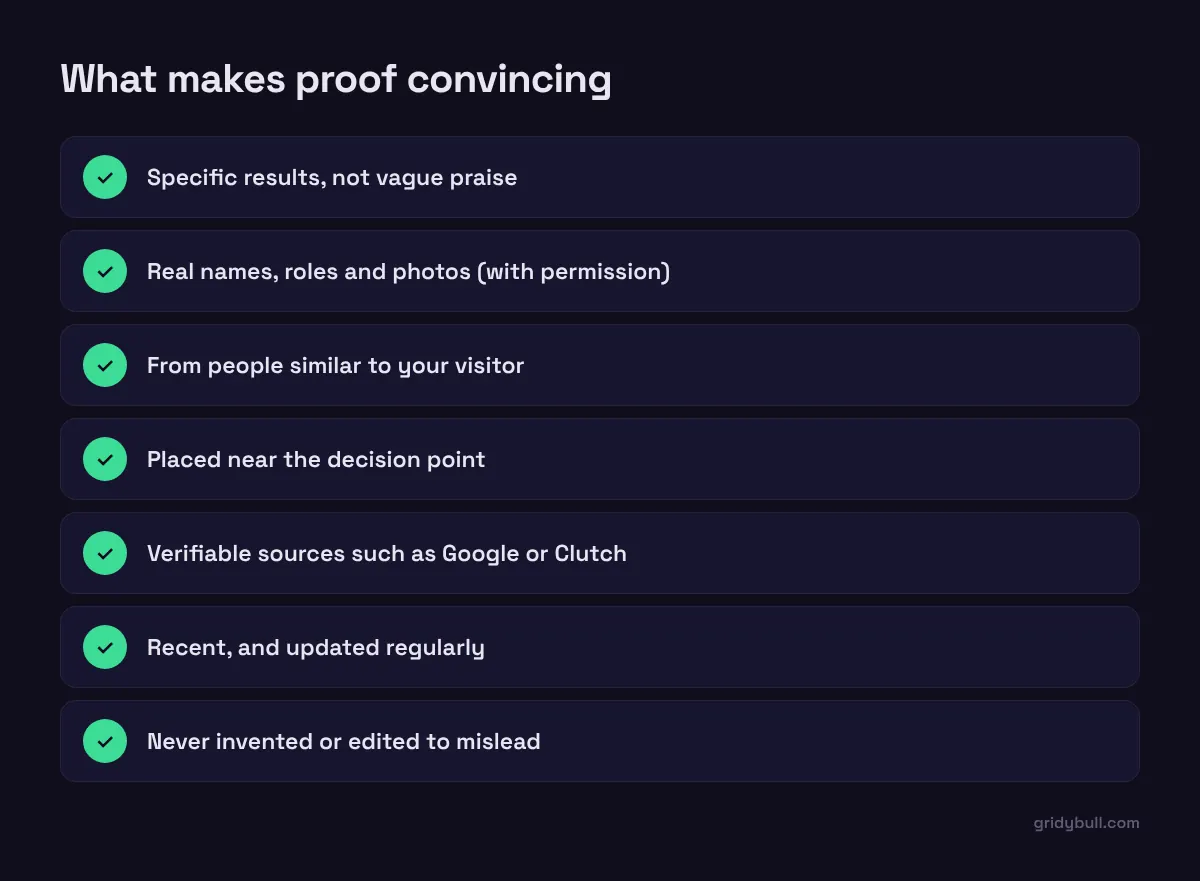
What makes proof convincing
- Specificity: details and numbers beat adjectives.
- Identity: a name, role, company and photo make a testimonial credible.
- Similarity: proof from people like your visitor, in the same industry or situation, is the most persuasive.
- Verifiability: links to real reviews or live projects let skeptical visitors check.
Where to place social proof
- Near calls to action: a short testimonial or rating next to the main button addresses hesitation at the moment of decision.
- On service pages: proof from clients who bought that specific service.
- Next to objections: if people worry about communication, show a testimonial that praises your communication.
- On pricing and contact pages: where commitment is highest.
How to collect better testimonials
Instead of asking “Could you write us a testimonial?”, ask a few guided questions:
- What was the situation before we worked together?
- What made you choose us?
- What changed after the project?
- What would you tell someone considering working with us?
Then turn the answers into a short quote, and ask the client to approve the final wording.
Keep it honest
Never invent testimonials, use fake names or stock photos as clients, or edit quotes to change their meaning. Beyond being unethical, fake reviews can break consumer protection rules in many countries, and they destroy trust when discovered. If you are just starting out, use what is real: marketplace reviews, a few honest quotes, or concept work clearly labelled as concept work.
Start with what you have
- Collect your existing reviews from every platform.
- Pick the three most specific ones and place them near your main calls to action.
- Ask your happiest recent client for a short case study interview.
- Make asking for reviews part of your project wrap-up process.
Good social proof does not make claims for you. It lets your clients make them, which is exactly why it works.
Related reading: Core Web Vitals Explained for Business Owners