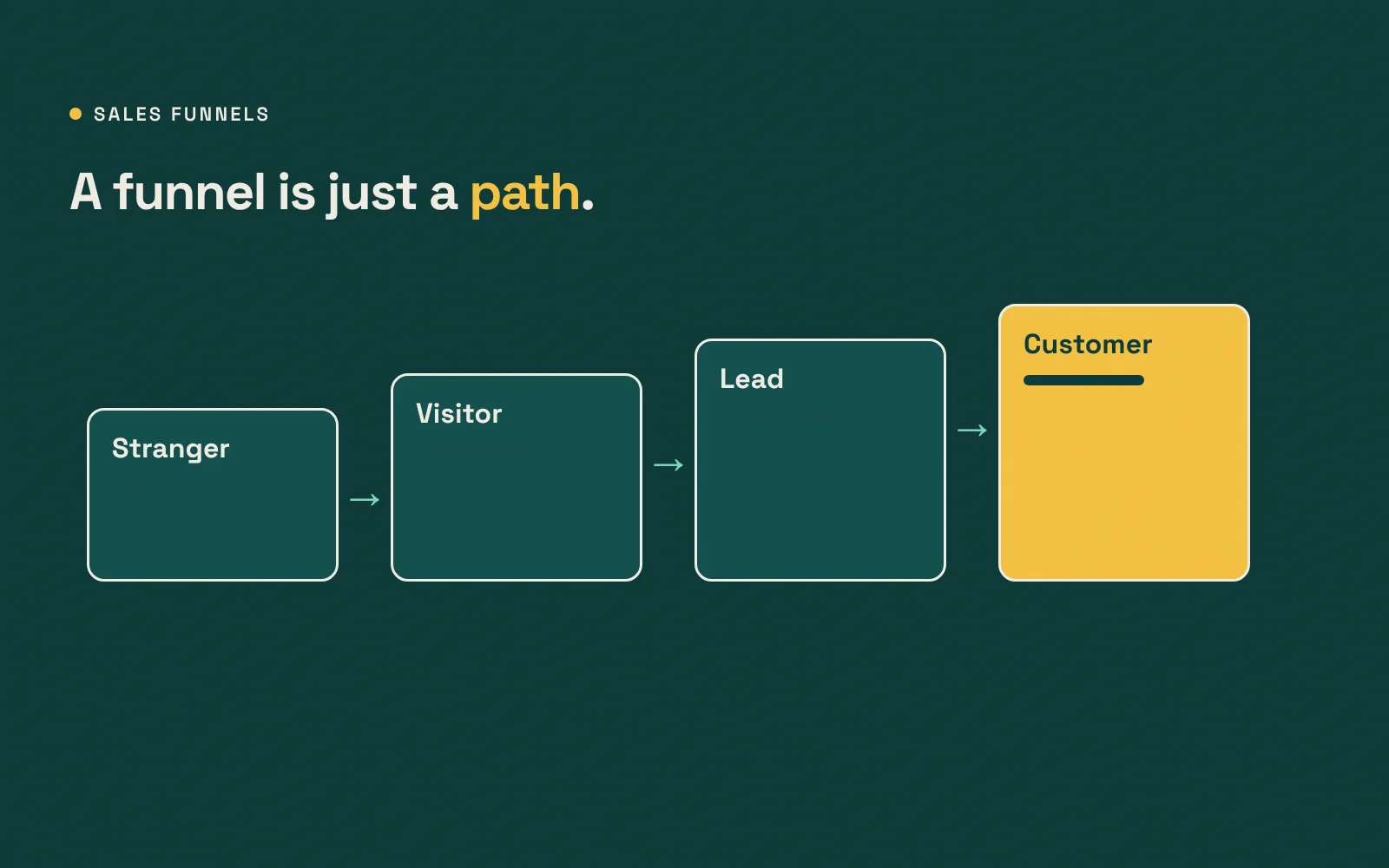
What is a sales funnel? It sounds like marketing jargon, but the idea is simple: it is the path people take from first hearing about you to becoming a paying client. Every business already has one. The question is whether it is designed on purpose or happens by accident.
This guide explains the stages of a funnel for a service business, such as a consultant, coach, agency or clinic, and what you need at each stage.
What is a sales funnel, and why is it called a funnel?
At each step, some people move forward and some drop off. Many people see your content, fewer visit your page, fewer still book a call, and a smaller group becomes clients. Drawn on paper, it narrows like a funnel. The goal is not to stop everyone dropping off, but to help the right people move forward easily.
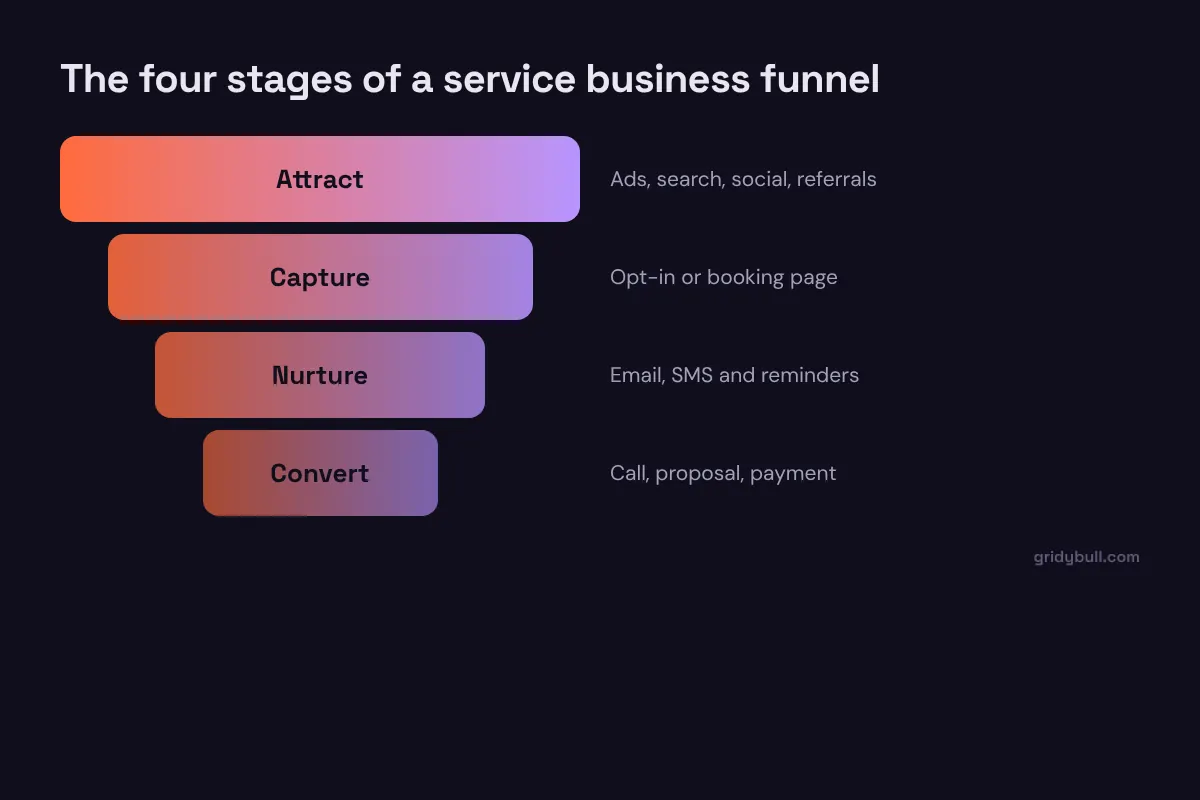
Stage 1: Attract
This is how people first find you: search, social media, ads, referrals, partnerships or events. The key is that each source sends people to a specific next step, not just to your homepage.
Stage 2: Capture
Most visitors are not ready to buy on their first visit. The capture stage gives them a reason to share their contact details, usually through:
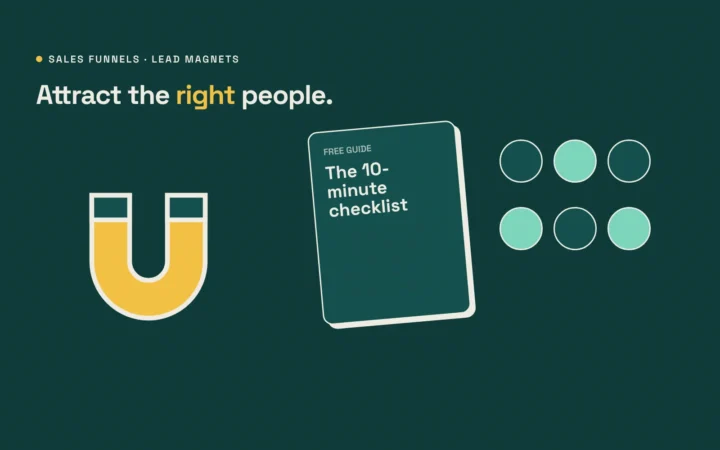
- A lead magnet: a guide, checklist, template or short training in exchange for an email.
- A booking page: for visitors who are ready to talk now.
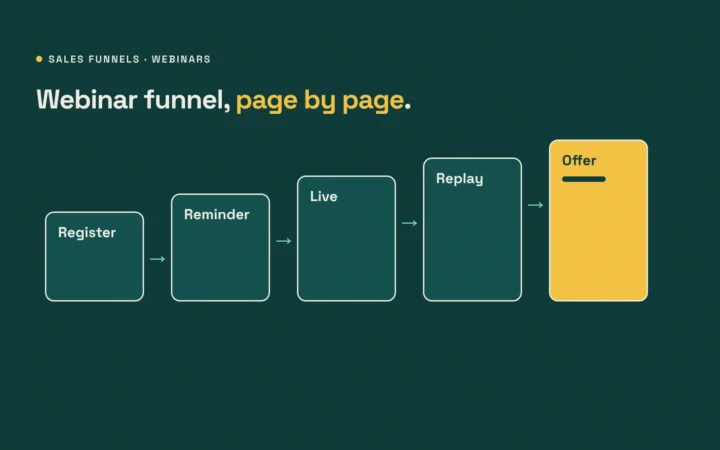
- A webinar or event registration: a bigger commitment of time, with a bigger payoff.
Stage 3: Nurture
Once you have someone’s contact details, the follow-up does the heavy lifting. Nurturing means staying helpful and present until they are ready:
- A welcome email series that delivers the promised resource and shares your best advice
- Reminders before booked calls, which reduce no-shows
- Case studies and answers to common objections
- Occasional invitations to take the next step
Stage 4: Convert
For service businesses, conversion usually happens on a call or through a proposal. The funnel’s job is to make that step easy: simple booking, clear expectations, a prepared prospect, and a smooth path to payment or a signed agreement.
A simple example
Imagine a bookkeeper who works with freelancers:
- She shares tax-season tips on LinkedIn (attract).
- Her posts link to a free “freelancer tax checklist” page (capture).
- Subscribers get a five-email series on keeping their books clean, ending with an invitation to a free review call (nurture).
- On the call, she recommends a monthly plan and sends a proposal with a payment link (convert).
Tools you can build it with
You can build a funnel with separate tools, such as a website, an email platform and a scheduler, or with an all-in-one platform:
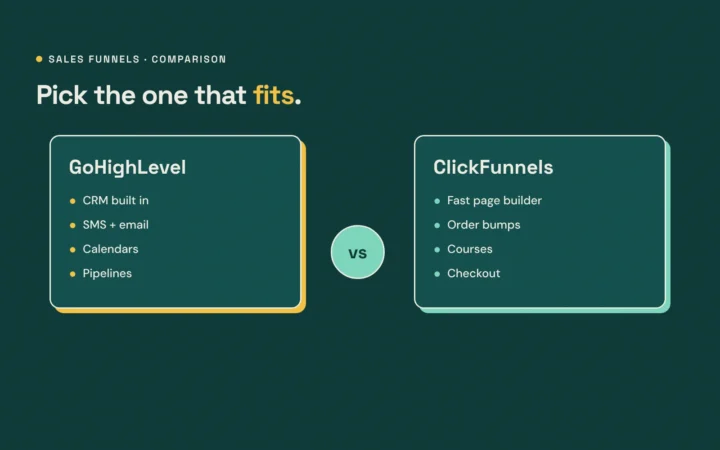
- GoHighLevel: CRM, funnels, email, SMS, booking and automation in one place.
- ClickFunnels: focused on funnel pages, checkout, email and courses.
- WordPress or Webflow plus integrations: flexible, if you already have a website you like.
The tool matters less than the plan. Map your stages on paper first, then choose the tool that fits.
How to measure your funnel
Track the conversion rate between each stage: visitors to leads, leads to booked calls, calls to clients. The stage with the biggest drop is usually where improvement pays off fastest. If many people book but few show up, fix your reminders before you spend more on ads.
Common mistakes
- Sending all traffic to the homepage instead of a focused page
- Collecting emails and then never following up
- Asking for a sales call before offering any value
- Building complicated automations before the basic path works
A good funnel is not a trick. It is a clear, helpful path that respects where each person is in their decision.